





Sápmi, the ancestral land of the Sámi people, extends across the northern parts of Norway, Sweden, Finland, and the Kola Peninsula in Russia. To this day, there is no system in place to consistently monitor the situation of the Sámi people’s rights throughout these territories. In 2021–2025, Sámi Allaskuvla – Sámi University of Applied Sciences (SUAS – Norway), the Saami Council (SC), and International Working Group for Indigenous Affairs (IWGIA – Denmark) teamed up to address the issue. Their collaboration was made possible by a 3-year grant from the Nordic Arctic Co-operation Programme of the Nordic Council of Ministers.
A resource for Indigenous Peoples by Indigenous Peoples
IWGIA is part of a global consortium that collectively developed and manages the Indigenous Navigator. The Indigenous Navigator took shape out of the awareness that Indigenous Peoples’ rights continued to be largely disregarded by nation states around the world, even years after the United Nations had adopted the Declaration on the Rights of Indigenous Peoples (UNDRIP, 2007). By providing a comprehensive framework and a set of user-friendly evaluation tools, the Indigenous Navigator facilitates monitoring the extent to which Indigenous Peoples’ rights are recognised and implemented worldwide. Information that is collected over time is made available on an online data portal, subject to consent from the Indigenous communities involved.
Since its launch in 2014, 320 communities in 29 countries have been involved. The collaboration between IWGIA and two leading Sámi institutions, SUAS and SC, has now implemented the Indigenous Navigator in Sápmi, a first in the Arctic context.
Data generated by communities
The Nordic Arctic Co-operation Programme grant made it possible to conduct three national surveys and subsequently three community surveys, one in each of Norway, Sweden, and Finland. In this way, it is possible to assess not only how national laws safeguard Indigenous Peoples’ rights, but also how Sámi people themselves experience them. The resulting data were entered into the Indigenous Navigator’s online platform, while further analyses have already been disseminated through two publications that are publicly available online.
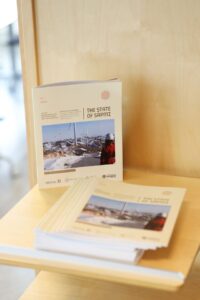
Findings from the collected data indicate that Nordic nation states have not been fully fulfilling their international obligations regarding Indigenous Peoples’ rights; it is therefore crucial that Norway, Sweden, and Finland commit to consistent, consent-based collaboration with Sámi institutions and communities. This is not least essential for the Sámi people to play a role as active agents in implementing the UN Sustainable Development Goals.
Increased knowledge, stronger connections
The project provided a first structured analysis of the situation of Indigenous Peoples’ rights across the three Nordic countries. In the process, it has increased the Sámi people’s awareness of their rights and has generated tools that will empower Sámi institutions, organisations, and individuals to operate at local, national, and international levels. Looking ahead, the collaboration strengthened the partnership between Sámi institutions and IWGIA. Perhaps even more importantly, it reinforced the connection between the Sámi and other Indigenous Peoples’ pursuit of justice worldwide.
30 years of focus on cooperation in the Arctic
The Nordic Council of Ministers has focused on cooperation in the Arctic for 30 years.
A large part of the Nordic land and sea areas lie in the Arctic region. The Nordic region is therefore strongly engaged in issues relating to this unique and harsh, but also vulnerable area.
The Nordic Arctic Programme 2025-2027 aims to support socially, economically and environmentally resilient Arctic societies. By promoting resilient civil societies, sustainable economic growth and green transition, the programme will support local initiatives and partnerships that inspire resilience in the Nordic-Arctic region. With the Nordic Arctic Programme, the Nordic Council of Ministers will support innovative Arctic projects that are in line with the Nordic Council of Ministers’ Vision 2030.
This series of articles deals with various projects that have received support through the Nordic Council of Ministers’ Arctic Focus over time. The program has had different titles over the years, from 2022-2024 the program was called the Arctic Cooperation Program and from 2025-2027 it is called the Nordic Arctic Program.
Facts about the Nordic Arctic Program
To ensure that a project is rooted in both the Arctic and the Nordic regions, a collaborative project must always include partners from at least three Nordic countries. That is: Greenland, Iceland, Norway, Sweden, Denmark, Finland, the Faroe Islands or Åland.
This can be supplemented by one or more Arctic partners outside the Nordic region, as long as the lead partner is from one of the Nordic countries.
Read more about the Nordic Arctic Program here: https://napa.gl/en/arctic-cooperation-programme/
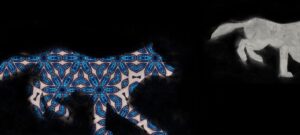
Qimusseq by Glenn Gear and AneMarie Ottosen
NAPA wishes everyone a peaceful Holiday by sharing the artwork Qimmusseq, which can function as a mental break for those experiencing it. Thank you to Glenn Gear and AneMarie Ottosen for letting us share their work both during the Suialaa Arts Festival in Nuuk and

NNK 25.-28. May 2023
is taking shape
Nuuk Nordic Culture Festival 2021 became a breathing space and a bearing towards brighter times. Artists and actors of all shapes and colors visited Nuuk at the end of October. Approx. 2500 guests over 4 days. 200 artists and actors from around the world who
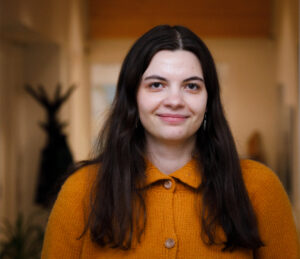
Meet the people behind NAPA: Anna Jensine Arntzen
Many of you probably know what NAPA does, but who are we? Currently, NAPA, The Nordic Institute in Greenland represents four Nordic countries: Greenland, Denmark, Norway and Finland. Today we introduce our Info Norden employee, Anna Jensine Arntzen. Anna is from Lofoten in Norway and

Writer conversation – Niviaq Korneliussen and Johanne Lykke Holm
On the occasion of the nominations for the Nordic Council Literature Prize 2021, Niviaq Korneliussen meets with Johanne Lykke Holm for an author interview. Niviaq Korneliussen has just received a three-year work grant (read more here in Danish) from The Danish Arts Foundation and has