In 2024–2025, MIO, Greenland’s children’s rights institution, conducted a feasibility study into the possibility of establishing a dedicated complaints board for children in Greenland. Based on dialogue and study visits to similar units in Nunavut , Iceland and Denmark, MIO formulated 15 concrete recommendations on how such a body could be introduced in a Greenlandic context. The results are compiled in a background note and a short policy brief, which show how a complaints body can strengthen children’s rights and ensure that Greenland lives up to its international obligations. The proposal quickly received political support in Inatsisartut . The project is supported by the Nordic Council of Ministers’ Nordic Arctic Programme.
The UN Convention on the Rights of the Child expects national human rights institutions to be able to handle individual complaints from children if their rights are violated. In Greenland, MIO currently acts as an advocate for children’s rights and offers general guidance and advice, but does not have a mandate to handle individual cases. At the same time, the other complaint options are not designed with children in mind and can be difficult for them to navigate. It is precisely this gap that the feasibility study proposes to close.
Experiences from Nunavut and Iceland
The grant from the Nordic Arctic Programme opened the door to collaborations with children’s rights organisations in the Nordic and Arctic regions.
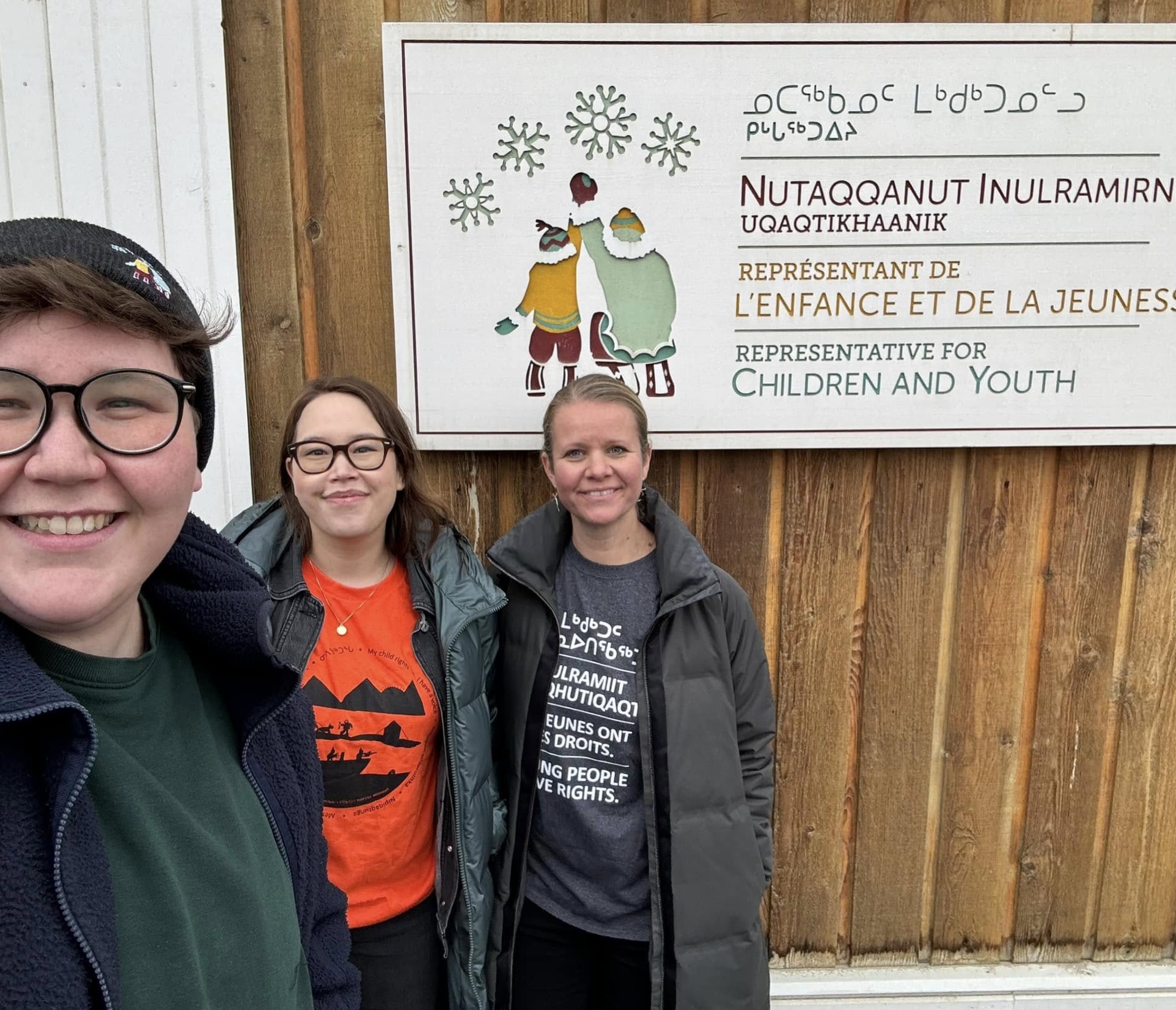
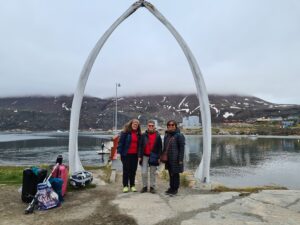
MIO’s grant opened the door to important collaborations with children rights organisations in the Nordic and Arctic region. Through study visits to partners in Nunavut and Iceland, MIO could familiarise itself with the operations of Complaints Boards working in conditions comparable to those in Greenland. The Representative for Children and Youth in Nunavut shared their first-hand experience with individual cases that appear highly relevant for the Greenlandic context. Moreover, the Iqaluit-based institution grounds its work in a series of Inuit social values; this was eventually reflected in one of the recommendations for the prospective body in Greenland, that shall be developed on the basis of Greenlandic values and needs.
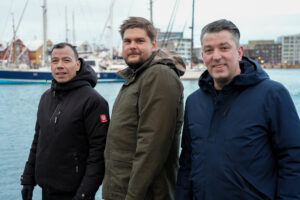
As for the partner in Iceland, Umboðsmaður Barna offered valuable insight into how children and youth can be included in the process of developing and, later, providing continued guidance to a Complaints Board. This would help to ground this essential service in a child-centred approach. Conversations and a visit from Børns Vilkår (Denmark) added perspective to children’s involvement, as well as to designing an accessible and child-friendly service.
The collaboration does not end here either: the networks that MIO developed through the project can further support work with children rights in Greenland in the years to come.
Political support
Following its presentation to members of Inatsisartut, MIO’s recommendations were quick to garner political support. As a result, the establishment of a Complaints Board for Children was included in the new Coalition Agreement from March 2025. In the meantime, Naalakkersuisut, the Government of Greenland, presented in October 2025 a proposal that would allow to file complaints directly to the UN’s Committee on the Rights of the Child, but only after one has tried all complaint options available nationally.
A lot of work awaits, but recent developments certainly move a few steps closer to MIO’s vision for a system that children can easily navigate, and where they can rest assured that someone is always there to help.
30 years of focus on cooperation in the Arctic
The Nordic Council of Ministers has focused on cooperation in the Arctic for 30 years.
A large part of the Nordic land and sea areas lie in the Arctic region. The Nordic region is therefore strongly engaged in issues relating to this unique and harsh, but also vulnerable area.
The Nordic Arctic Programme 2025-2027 aims to support socially, economically and environmentally resilient Arctic societies. By promoting resilient civil societies, sustainable economic growth and green transition, the programme will support local initiatives and partnerships that inspire resilience in the Nordic-Arctic region. With the Nordic Arctic Programme, the Nordic Council of Ministers will support innovative Arctic projects that are in line with the Nordic Council of Ministers’ Vision 2030.
This series of articles deals with various projects that have received support through the Nordic Council of Ministers’ Arctic Focus over time. The program has had different titles over the years, from 2022-2024 the program was called the Arctic Cooperation Program and from 2025-2027 it is called the Nordic Arctic Program.
Facts about the Nordic Arctic Program
To ensure that a project is rooted in both the Arctic and the Nordic regions, a collaborative project must always include partners from at least three Nordic countries. That is: Greenland, Iceland, Norway, Sweden, Denmark, Finland, the Faroe Islands or Åland.
This can be supplemented by one or more Arctic partners outside the Nordic region, as long as the lead partner is from one of the Nordic countries.
MIO’s project is rooted in both the Arctic and the Nordic regions through the collaboration between three Nordic countries, Greenland, Iceland and Denmark, as well as a partnership with the representative for children and youth in Nunavut .
Read more about the Nordic Arctic Program here: https://napa.gl/en/arctic-cooperation-programme/