


“Cooperation Across the Arctic” Became the Keyword at Panel Debate at Westnordic Day
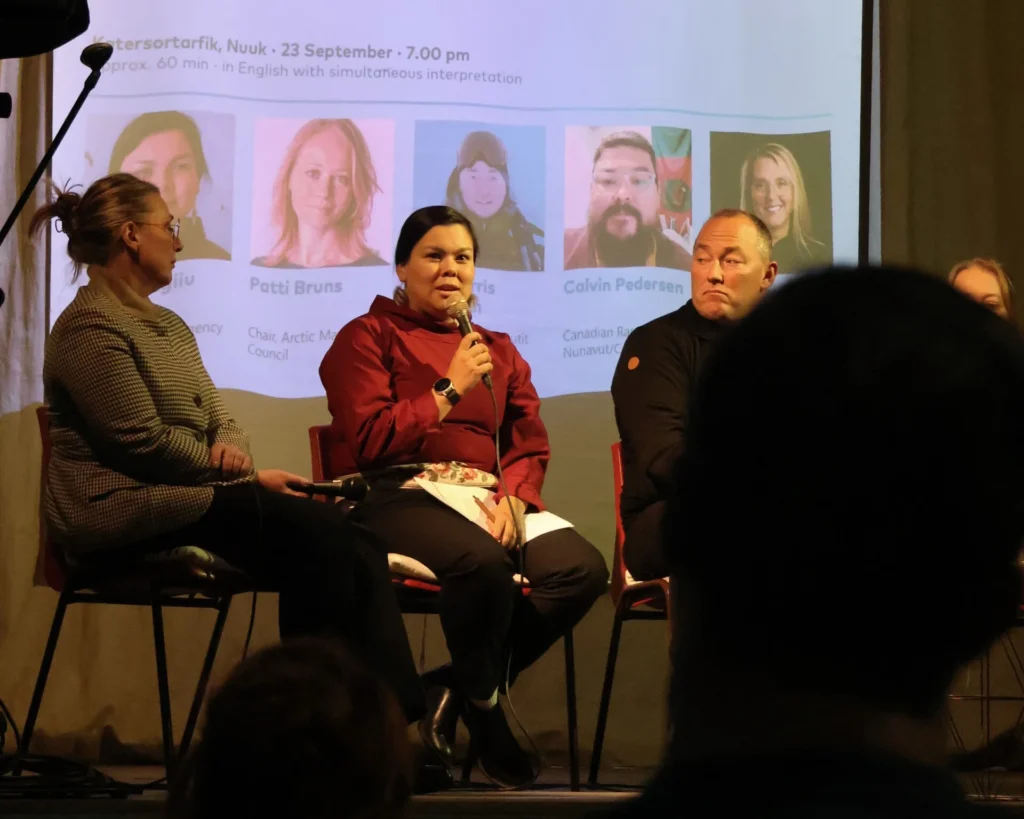
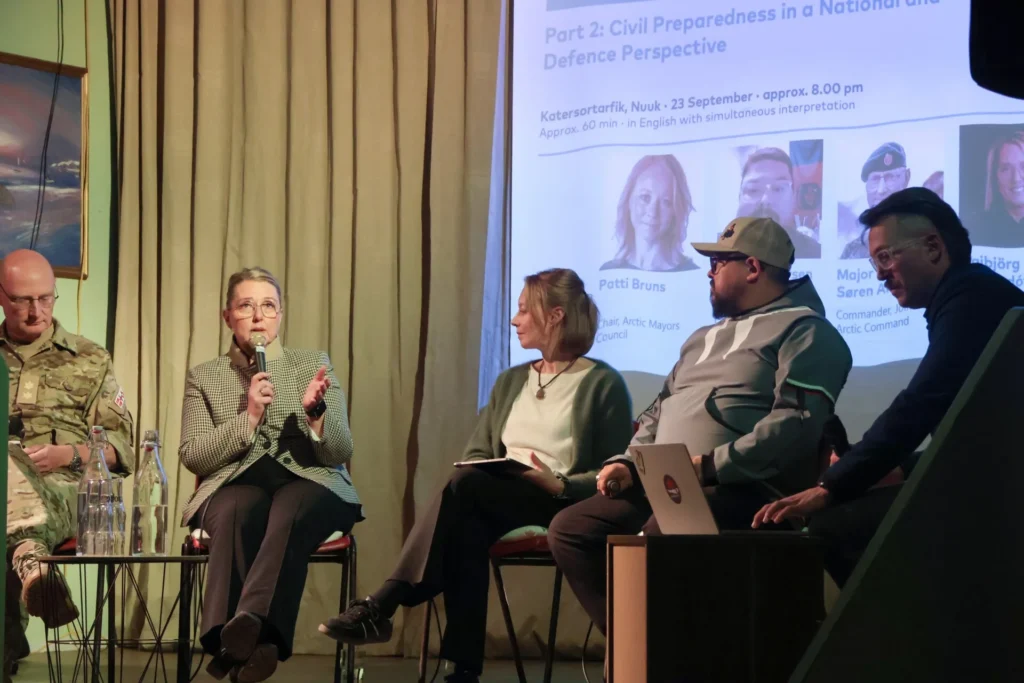
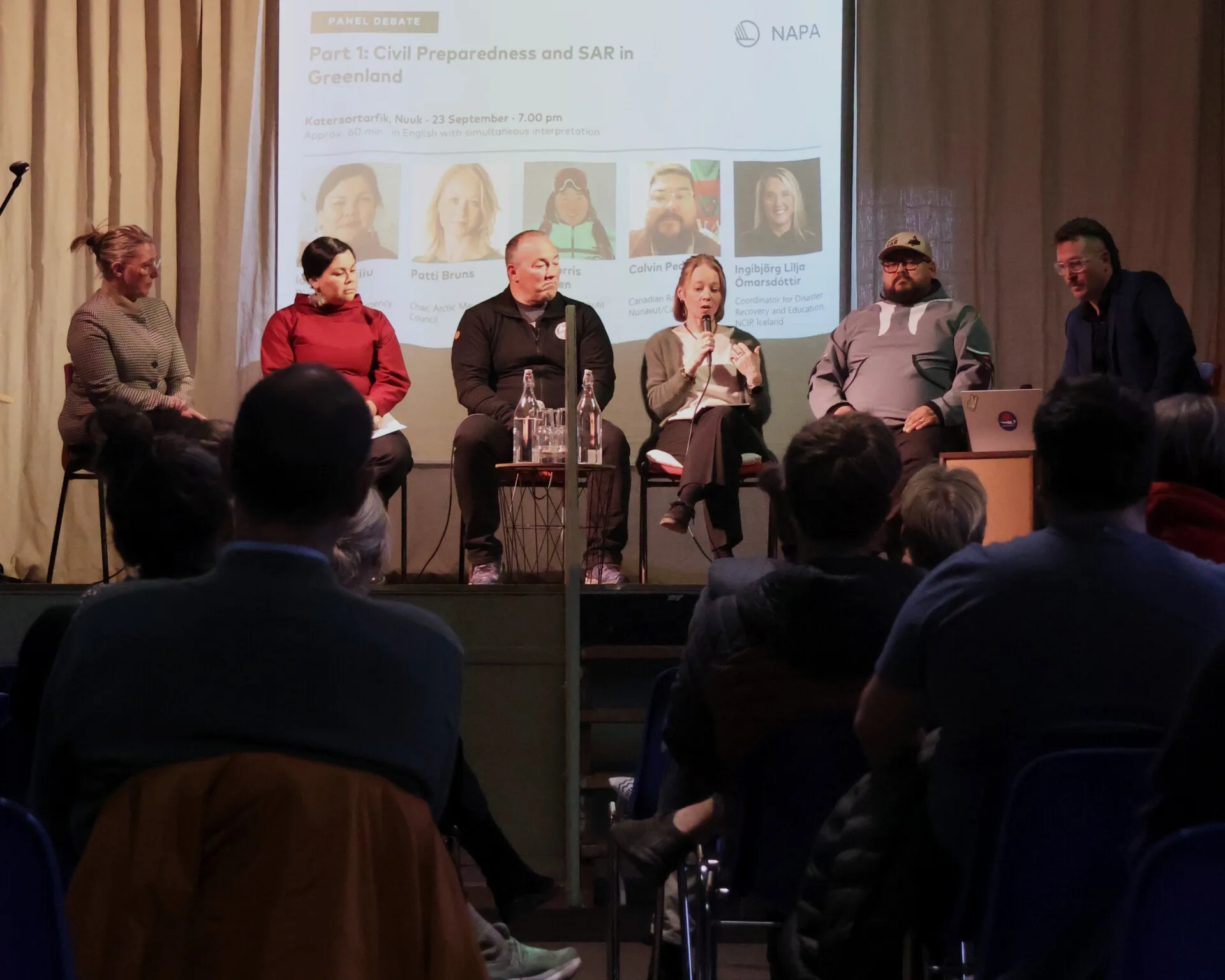
Representatives from across the Arctic region gathered in Nuuk for two panel discussions exploring civil preparedness, search and rescue (SAR), and the importance of Arctic cooperation and coordination. The event marked both West Nordic Day and the 30th anniversary of the Nordic Arctic Programme.
The panel featured:
Lars Borris Pedersen, Team Leader of Qamutit SAR
Iddimanngiiu Bianco, Naalakkersuisoq (Minister) for Infrastructure and Emergency Preparedness, Greenland
Major General Søren Andersen, Commander of the Joint Arctic Command
Calvin Pedersen, Head of SAR in Nunavut at Nunavut Emergency Management, Canada
Ingibjörg Lilja Ómarsdóttir, Disaster Recovery and Education Coordinator at the Department of Civil Protection and Emergency Management (NCIP), Iceland
Patti Bruns, Chair of Arctic Mayors’ Forum
The evening started with an opening speech by Susanne Andreasen, Director of NAPA, while the discussions were moderated by Patrick Muller Abrahamsen, hoist operator at Air Greenland and emergency preparedness consultant.
At the heart of the discussions were questions about what civil preparedness means within the different Arctic communities and how well Arctic societies are equipped to face future challenges.
Local Knowledge is Essentiel
Calvin Pedersen, a fourth-generation ranger with SAR Nunavut, shared experiences from the Canadian Arctic. He highlighted how search and rescue operations are deeply interconnected with the strong sense of community that characterizes many Indigenous populations in the Arctic regions.
“As a volunteer, you often know the people reporting someone missing, or you know the person who is missing,” he explained.
Calvin Pedersen noted that recruiting volunteers for SAR operations is rarely difficult because helping one another is a deeply rooted value in these communities. At the same time, local volunteers possess extensive knowledge of the land, making them indispensable in SAR.
This perspective Lars Borris Pedersen of Qamutit SAR agreed with. He stressed that trust in local expertise must remain a cornerstone of effective emergency response:
“There should be a great trust in local knowledge, as the local volunteers often are those, who know how to operate in Greenland most quickly and effectively.”
A Stronger Arctic Cooperation Effort is Needed
The need for closer cooperation and stronger coordination emerged as ongoing themes throughout the debate. These priorities also lie at the core of the Nordic Arctic Programme, which for the past 30 years has worked to strengthen collaboration between Arctic regions.
The panel agreed that the challenges facing Arctic preparedness cannot be reduced to financial resources alone. Several speakers emphasized that effective coordination is often one of the most important, yet least visible, elements of a resilient emergency response system.
Ingibjörg Ómarsdóttir pointed out that successful coordination often goes unnoticed:
“Coordination is incredibly important, but good coordination is often invisible. When it works well, people hardly notice it, yet the consequences and damage are significantly reduced.”
The discussion also touched upon the possibility of establishing a national coordinating body for voluntary response efforts and civil preparedness in Greenland, something that does not currently exist.
Major General Søren Andersen of the Joint Arctic Command noted that any initiative to strengthen national coordination in Greenland would need to come from national authorities. However, he emphasized that the Joint Arctic Command would be able to support such efforts with its expertise.
Knowledge Sharing Strengthens Preparedness
Patti Bruns of the Arctic Mayors’ Forum highlighted the value of knowledge exchange across Arctic regions. According to her, more roundtable meetings are needed where different competencies, experiences, and perspectives can come together.
Such forums create opportunities to incorporate local and indigenous knowledge while also encouraging younger generations to engage in civil preparedness and search and rescue efforts in ways that reflect their own experiences and understanding of their communities.
“People become engaged in civil preparedness when they feel heard and when they are genuinely included in the conversation.”
The panel debate clearly demonstrated that strong local communities, trust in local knowledge, and enhanced cooperation across the Arctic are essential building blocks for strengthening future preparedness and SAR capacity.
The conversation will continue at the Arctic Circle Assembly in Iceland on 9 October, where several of the themes raised in Nuuk will be revisited.
Nutaarsiassat takunngitsoorpigit?

A look back at Suialaa Arts Festival 2025
Suialaa Arts Festival 2025 took place in Nuuk from 23–26 October. The festival is Greenland’s largest recurring cultural event, held every two years. NAPA is proud co-owner of the festival together with Kommuneqarfik Sermersooq. This year, Suialaa unfolded throughout Nuuk with concerts, theatre, dance performances, exhibitions, literary events, seminars, workshops and shared meeting spaces for artists and audiences. Thank you to all artists, volunteers and partners for contributing to
A Resilient Arctic Starts with Resilient Digital Infrastructure
The Digital Arctic Futures Conference Focused on the Future of the Internet in Greenland and the Arctic. The internet has become an essential part of everyday life in the Arctic. It is used for everything from card payments and digital mail to Netflix, hunting licenses,

Greenland Music Policy & Artist Development
Join leading international experts, Greenlandic artists, policymakers, and industry professionals for a unique two-day micro-conference focused on shaping the future of Greenland’s music ecosystem through policy, artist development, and collaborative dialogue. Greenland Music Policy & Artist Development Conference 2026 is about the united mission by
Young talents unleash their potential to get innovative ideas in Greenland
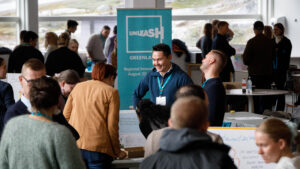
For one week, 200 young people were together in Nuuk to come up with innovative solutions to challenges we experience here in the Arctic. Ghost nets that lie on the bottom and fish on, never being picked up. Lack of local educational opportunities. Long distances