






Film, Greenland, Culture, Panel discussion
Full house for panel discussion and screening of ‘Orsugiak – Greenland’s White Gold’ in Nuuk
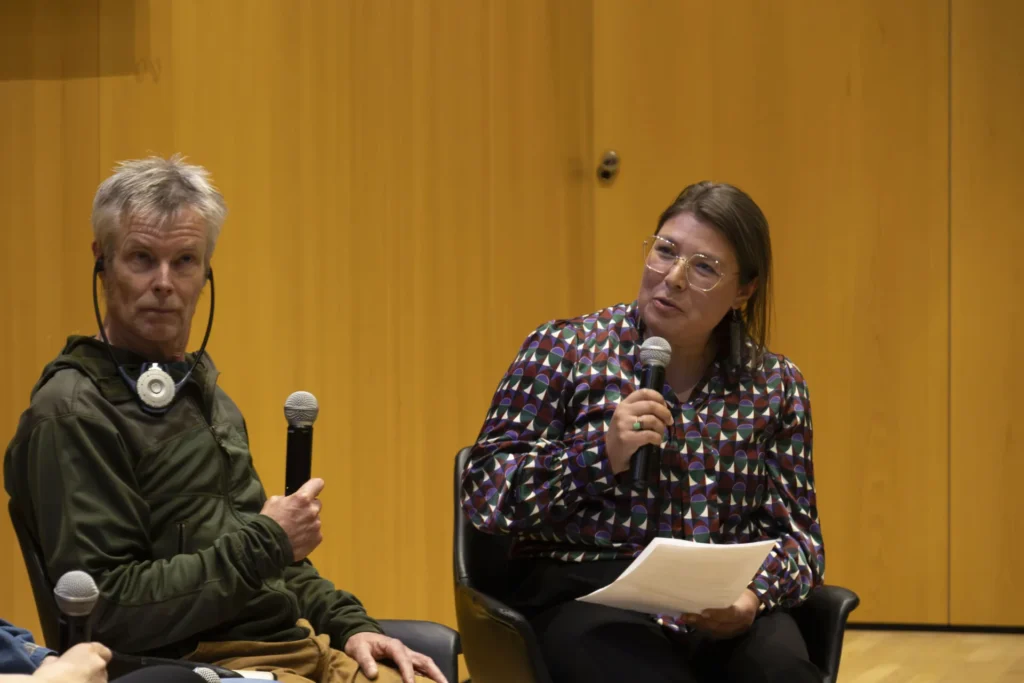
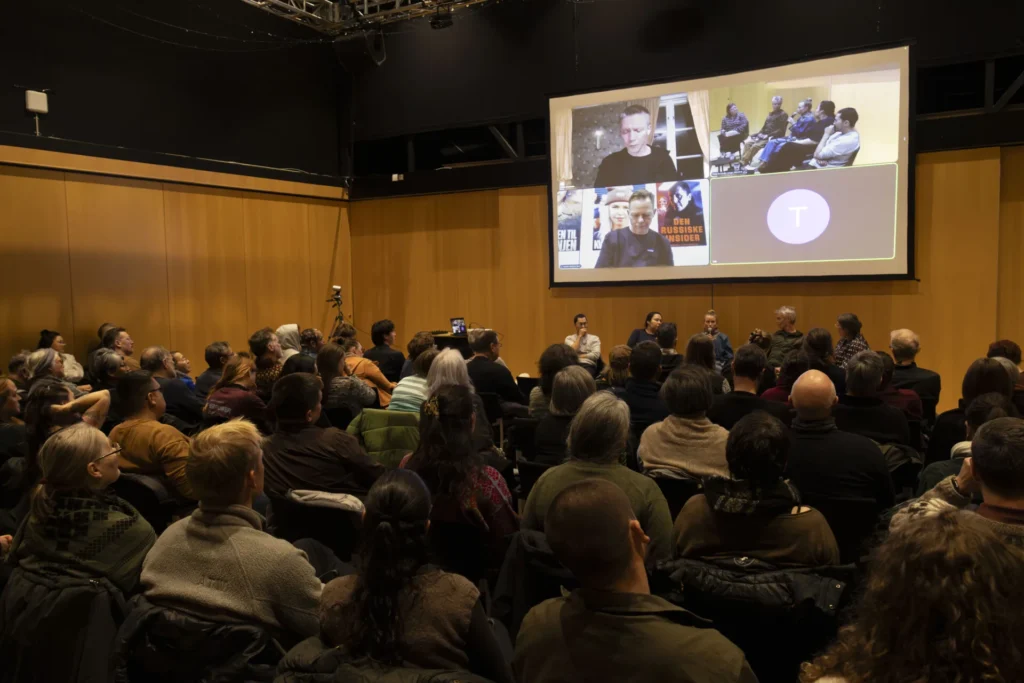
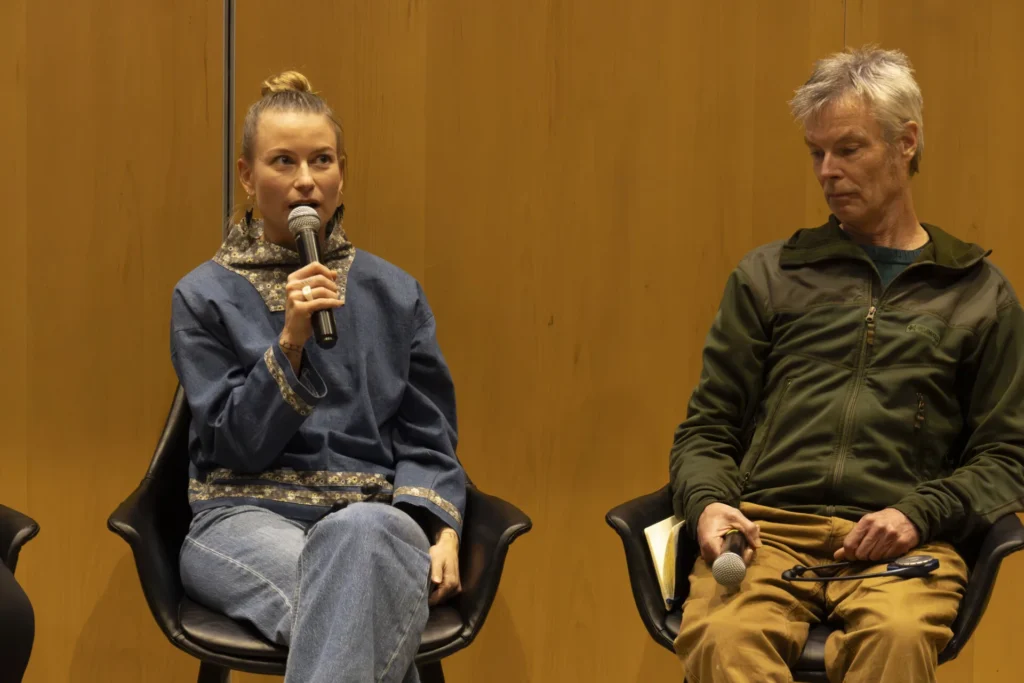
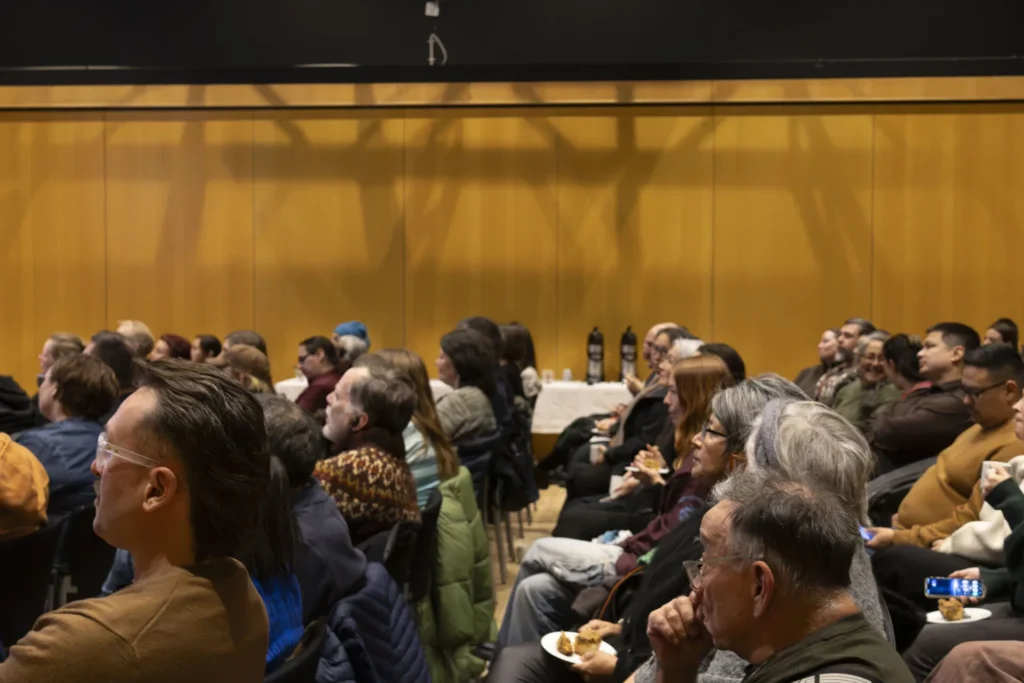
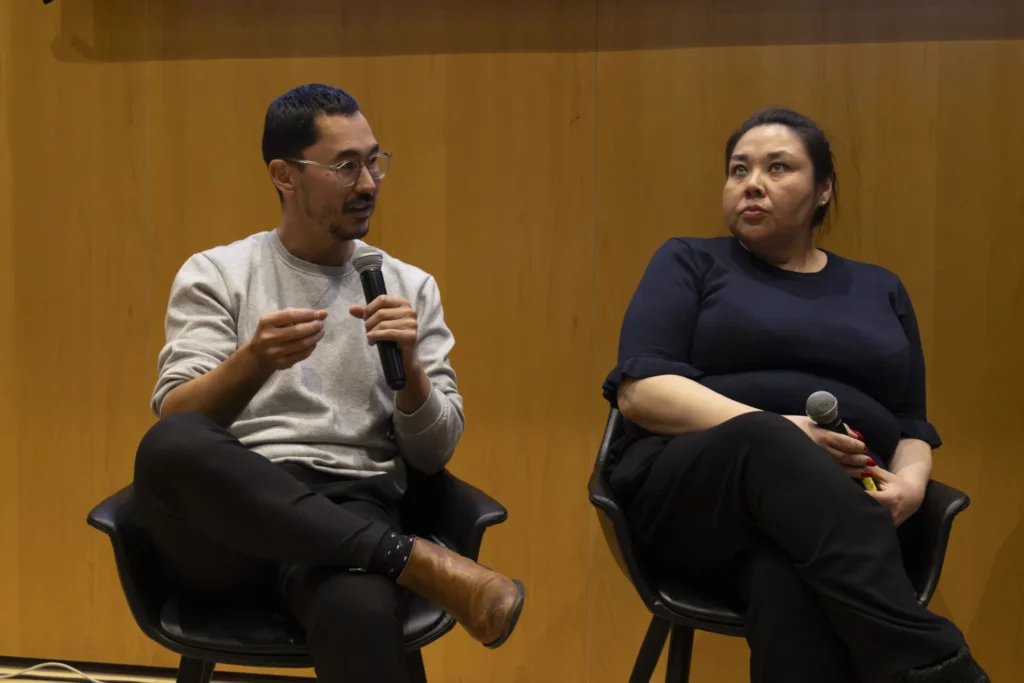
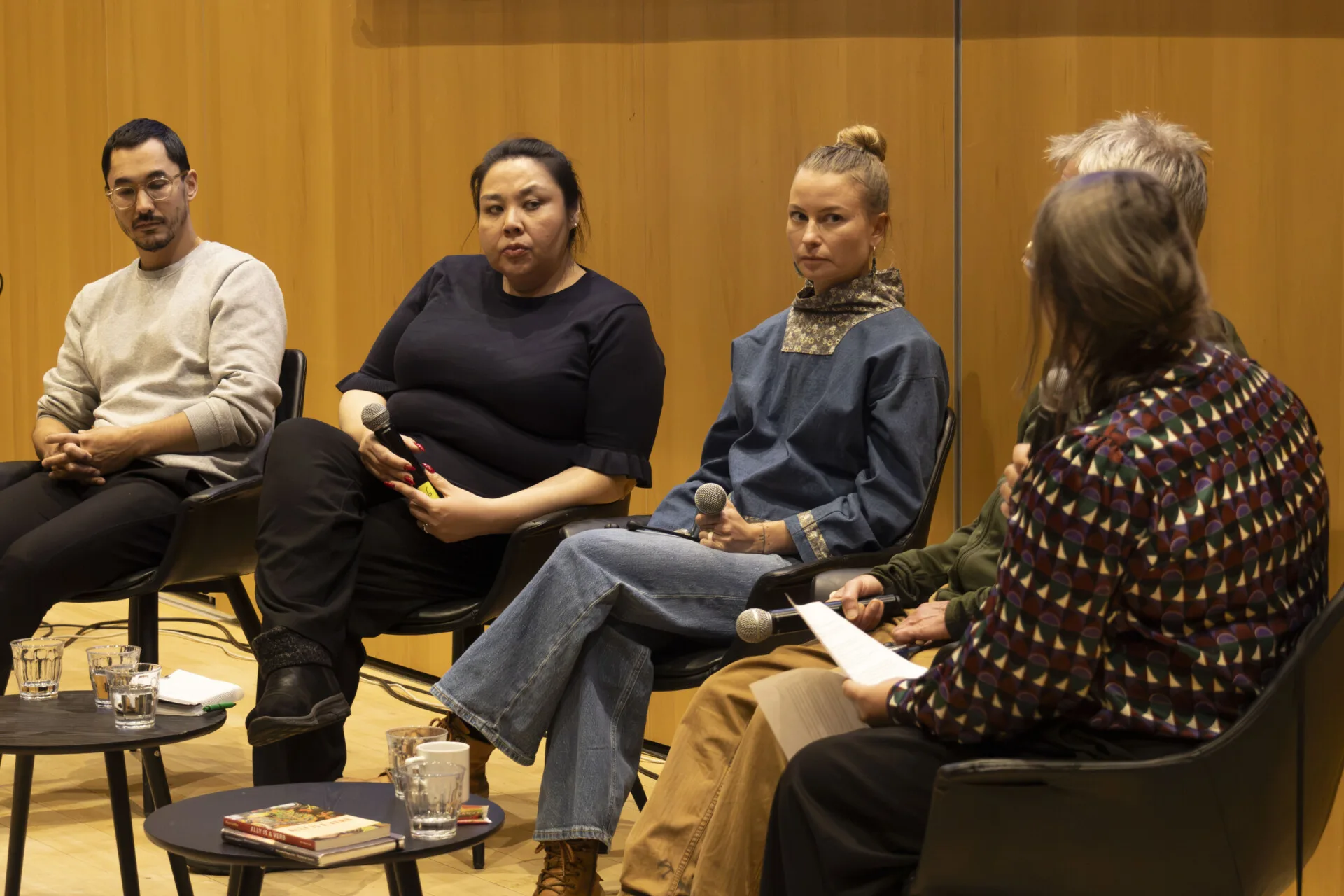
A lot of people showed up and attended a panel discussion and screening of the documentary Orsugiak – Greenland’s White Gold at Katuaq on 28 October, bringing together filmmakers and media professionals.
The 2025 documentary film Orsugiak – Greenland’s White Gold examines Denmark’s extraction of cryolite in Ivittuut, which took place from 1854 to 1987. The documentary and its central makers became subjects of a heated debate in the Danish media and among the public. This led to the film being removed from the Danish media ‘Danmarks Radio’ (DR)’s platforms ten days after its release.
The film and its aftermath raised a series of questions that extend far beyond the debate about the documentary’s content: Who has the right to tell Greenland’s history? What is truth, and who has the right to decide what is true? What role can film play in Greenlandic identity-building and in truth and reconciliation in the relationship between Greenland and Denmark?
These were some of the many questions discussed during the panel conversation.
Sara Olsvig, PhD and recently departed president of the Inuit Circumpolar Council (ICC), was an astute and engaged moderator of the panel, which comprised Naja Dyrendom Graugaard, the film’s central participant and an associate professor at the University of Copenhagen; journalist and co-director Claus Pilehave; Inunnguaq Petrussen from the Greenland Film Institute; Arnaq Nielsen from the Greenland Media Association; filmmaker Inuk Jørgensen; and Casper Walbum Høst, head of Documentaries & Investigative Journalism at DR News.
One film, different perspectives
DR was represented on the panel, marking the first time since the film’s removal that DR had taken part in a public panel discussion about it. DR’s representative was Casper Walbum Høst, who took up his position as head of Documentaries & Investigative Journalism after the film was removed. He had therefore not been involved in the decision himself.
Casper Walbum Høst described Orsugiak as an important and well-told film, but also explained that one of the reasons for its removal was that, in DR’s assessment, the differences between the economic models used in the film had not been made sufficiently clear.
This led to a broader discussion about what is perceived as a general or widely shared understanding, and who “the general public” actually refers to. When Casper Walbum Høst used the phrase, Sara Olsvig asked whether he meant the Danish public. He confirmed that he did and reflected on how, by using the phrase, he had automatically adopted a Danish frame of reference.
Several panellists pointed out that what is perceived as a broad, neutral or conventional understanding depends on the context and the place from which one watches the film. Naja Dyrendom Graugaard highlighted that the film had been received differently in Greenland and internationally than in the Danish debate. In her view, the film challenges a specifically Danish understanding of colonial history:
“The writing of Danish-Greenlandic colonial history has largely been dominated by a Danish perspective. That is why filmmaking and knowledge production are so important: they give us the opportunity to tell our history from a Kalaallit (Greenlandic) perspective.”
Claus Pilehave, co-writer and co-director of the film, said that the period following its removal had been difficult for the filmmakers. He had received considerable support in private, but fewer people had been willing to express their support publicly. He also suggested that the experience may have made filmmakers more cautious about addressing difficult subjects.
The right to narrative sovereignty
The right to define and tell one’s own history was a recurring theme throughout the discussion.
Inunnguaq Petrussen, director of the Greenland Film Institute, emphasised the importance of narrative sovereignty. The concept articulates Indigenous peoples’ right and ability to create and control their own narratives. He explained that this principle is central to the Film Institute’s work to improve the conditions for Greenlandic filmmakers to tell their own stories on their own terms.
Inuk Jørgensen pointed out that many of the images and stories about Greenland shown in film and on television over the years have been created by people with no connection to the country. For this reason, it has long been important for Greenlandic filmmakers to take part in telling Greenland’s story themselves, both in front of and behind the camera.
For Arnaq Nielsen, chair of the Greenland Media Association, the issue was not just about the assessment of a single documentary, but about the fundamental conditions for journalistic and editorial work. She stressed that although navigating different information and perspectives can be difficult, this is no reason to shut down the conversation, as happened with the removal of Orsugiak.
Hope for future dialogue and Greenlandic film
In closing, the panellists expressed the hope that the film and the questions it has raised would continue to resonate. They also expressed a wish for Greenlandic filmmakers to continue telling their own stories and to have the courage to tackle difficult subjects. In this context, Inunnguaq Petrussen highlighted that the Greenland Film Institute had received ten million Danish kroner for documentary production through the Danish Finance Act. The strong interest in accessing the funding shows that there are still many stories Greenlandic filmmakers want to tell.
The event was organised by NAPA in collaboration with the Nordic House in Reykjavík, which had hosted a similar screening and panel discussion a week earlier, although with a slightly different panel.